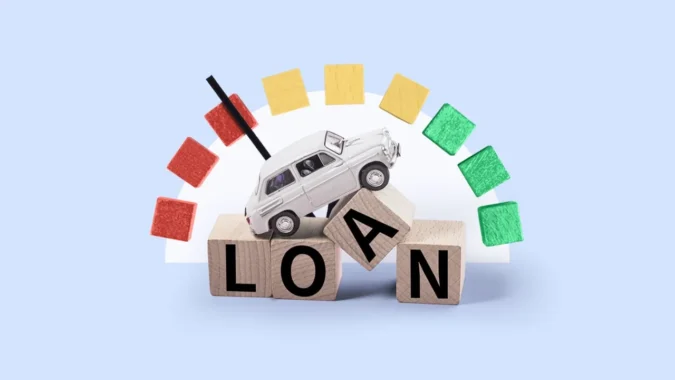
NEW YORK, NY — Borrowers looking for a car loan with bad credit are facing a costly market in 2026, according to Bankrate’s consumer guidance. Experian data cited by the site shows that fewer than 15% of auto loan borrowers had credit scores of 600 or below in the second quarter of 2026.
That small slice of borrowers also paid far more to finance a vehicle. Bankrate says the average interest rate for that group fell between 19% and 22%, while borrowers with scores of 781 or higher saw average used car loan rates of 6.29% in the same period.
The message is simple: approval is possible, but the price can be steep. Bankrate says shoppers with weaker credit should try to improve their scores before buying if they can, and if they cannot wait, they should work to find the best available loan rather than accepting the first expensive offer.
Why Your Credit Score Shapes the Loan You Can Get
Bankrate says lenders rely heavily on credit scores when deciding whether to approve an auto loan and what rate to offer. Under the FICO automotive scoring system, which runs from 250 to 900, a score below 600 is considered subprime.
The lower the score, the harder it can be to secure favorable terms. Bankrate notes that near-prime borrowers generally have better approval odds and lower rates than borrowers in the deep subprime range, where a lender may see much more risk.
Because of that, it recommends checking your score three to six months before you plan to apply. That gives borrowers time to compare lenders, repair their credit if possible and focus on financing options built for their range instead of learning the hard way at the dealership.
Down Payments Can Help Offset High Rates and Limited Approval Odds
One of Bankrate’s main suggestions is to save for a down payment before applying. Putting money down lowers the amount you borrow, which in turn reduces the monthly payment and the total interest paid over time.
A larger down payment can also help borrowers with weaker credit look less risky to lenders. Bankrate says it can improve the loan-to-value ratio and increase the chance of approval, especially when a credit score alone may not be enough to win a competitive offer.
The general rule of thumb it cites is 20%, though it also says many buyers will not be able to reach that level if they need a vehicle right away. Even so, every additional dollar up front can trim long-term costs on a loan that is already likely to carry a higher APR.
Prequalification Gives Buyers a Better View Before They Commit
Bankrate recommends prequalifying with several lenders before visiting a dealership. Prequalification can show likely loan terms without a hard credit pull, which means buyers can compare offers without briefly dinging their scores each time.
The process usually relies on self-reported information such as name, address, income, monthly expenses and contact details. The cleaner the information, the more accurate the estimate will be.
After comparing prequalified offers, shoppers can move to preapproval with the lenders they like best. Bankrate says preapproval carries more weight at the dealership because it shows a lender is willing to extend the loan. Multiple applications submitted within a 14-day window are generally counted as one inquiry, limiting the damage from rate shopping.
Subprime Borrowers Often See Long Terms and High Total Interest
Bankrate says shoppers should compare loan terms, not just monthly payments. A low payment can hide a long repayment period, and longer terms usually mean paying more interest over the life of the loan.
In mid-2026, the average interest rate on used car loans for subprime borrowers was 19.10%, according to the data Bankrate cites. For borrowers with scores of 500 or lower, that average climbed to 21.62%.
Bankrate points to a $30,000 loan with a six-year term as an example of how quickly interest costs can add up. It also says total car costs, including insurance, maintenance and gas, should generally stay between 10% and 15% of take-home pay. The shortest affordable term is usually the better choice.
Cosigners, Add Ons and Dealer Tactics Can Change the Final Cost
For borrowers who need extra help qualifying, Bankrate says a trusted cosigner or co-borrower may improve the odds. A cosigner with strong credit and steady income can lower a lender’s risk, while a co-borrower shares both responsibility and ownership of the vehicle.
That help comes with real risks. If the loan goes delinquent, the cosigner’s credit can suffer, and the arrangement may make it harder for that person to borrow elsewhere. Bankrate also warns buyers to avoid financing add-ons such as extended warranties, after-market services or gap insurance if they are bundled into the loan.
It also advises shoppers to make sure final terms are locked in before signing. Some dealers offer conditional approval, but Bankrate warns that so-called yo-yo financing, in which terms change after the contract is signed, is illegal.
If Approval Still Fails, Waiting or Refinancing May Be the Best Move
If a borrower cannot get approved, Bankrate says the safest option may be to delay the purchase. Waiting gives buyers time to pay down debt, build a stronger payment history and save more for a down payment, all of which can help with a future application.
Another option is buying privately for cash, which avoids financing altogether. That route can be cheaper and takes credit out of the equation, but Bankrate notes that private sales usually do not offer the same warranties or protections as dealership purchases.
For buyers who must take a high-rate loan now, refinancing later can be a useful follow-up move. Bankrate says many borrowers wait about six months so they can establish payment history and improve credit before seeking a better rate. Making payments on time remains one of the clearest ways to use the loan itself to rebuild credit.
More on what homes, rents and new builds are doing near you, on RHS Commoner.
