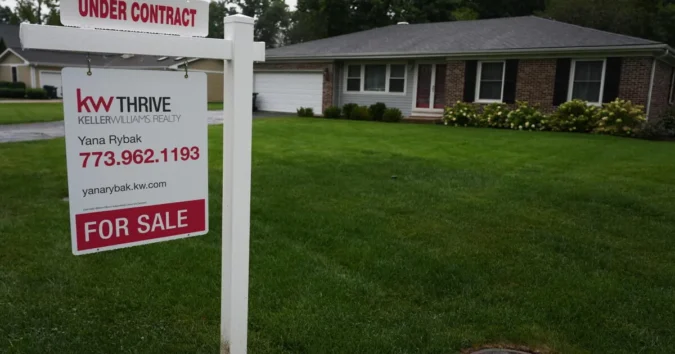
WASHINGTON, DC — The average long-term U.S. mortgage rate climbed this week to its highest point in nearly three years, extending a run of increases that is adding pressure to buyers and homeowners alike. Freddie Mac said the benchmark 30-year fixed-rate mortgage rose to 7.28 percent, up from 7.03 percent a week earlier.
That was the largest weekly jump in four years. The average is now at its highest level since Nov. 22, 2023, when it reached 7.29 percent, and the move marks the sixth straight week of increases. A year ago, the 30-year rate averaged 6.34 percent.
15-year loans climb too as refinancing gets more expensive
Borrowing costs also moved higher for 15-year fixed-rate mortgages, a product often used by borrowers refinancing an existing home loan. Freddie Mac said the average on that loan rose to 6.60 percent from 6.42 percent the previous week.
That compares with 5.55 percent a year ago. The increase matters because many households use the shorter-term mortgage to lower total interest costs or move out of an older loan, and higher rates can make that math much less appealing.
Higher rates are squeezing buyers and slowing decisions
Rising mortgage rates can add hundreds of dollars a month to a borrower’s payment and reduce how much house a buyer can afford. As borrowing costs move up, some would-be home shoppers choose to wait rather than lock in a payment they no longer want to carry.
The recent jump is especially notable because the average 30-year mortgage briefly fell to 5.98 percent in late February, the lowest level going back to late 2022. Since then, the roughly 1 percentage point increase has translated to an estimated extra $276 a month on a $400,000 home loan at the current average rate.
Oil prices, inflation expectations and Treasury yields are pushing mortgage costs higher
Mortgage rates are shaped by inflation, Federal Reserve policy and investors’ expectations for the economy. In practice, they usually move with the 10-year Treasury yield, which lenders use as a guide when pricing home loans.
Concerns about higher inflation, fueled by surging oil prices, have helped push yields upward. The 10-year Treasury yield stood at 3.97 percent in late February before the war began and jumped to 5.27 percent in midday trading Thursday. That is roughly back to the level seen in 2007, before the real estate-driven financial crisis.
A weak housing market is feeling the strain from sustained borrowing costs
The U.S. housing market has been stuck in a slump since 2022, when mortgage rates began rising from pandemic-era lows. Sales of previously occupied U.S. homes were essentially flat last year, remaining near a 30-year low.
In August, existing home sales fell 2 percent from July to a seasonally adjusted annual rate of 3.98 million units, according to the National Association of Realtors. That was the slowest annual pace in more than a year and added to signs that high mortgage rates are keeping the market soft.
Mortgage applications fall again while adjustable-rate loans gain ground
The pullback is showing up in loan activity too. The Mortgage Bankers Association said mortgage applications, including purchase and refinance loans, fell 6 percent last week from the previous week. That was the fourth straight weekly decline.
Applications to refinance existing mortgages also dropped. Meanwhile, adjustable-rate mortgages accounted for more than 10 percent of all applications last week, reflecting how some borrowers are looking for lower initial payments when traditional fixed-rate loans become too expensive.
More on what homes, rents and new builds are doing near you, on RHS Commoner.
