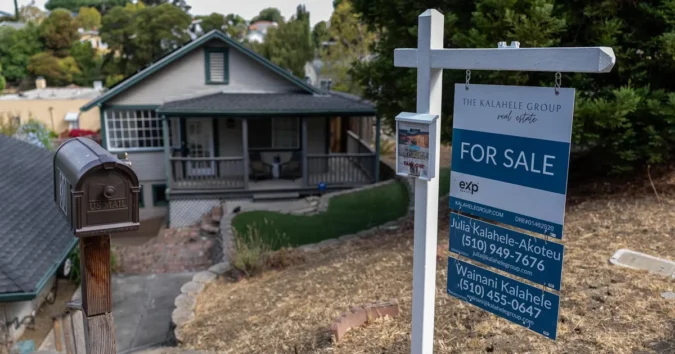
WASHINGTON, DC — Mortgage rates are moving back toward 7%, and the jump is making an already difficult home search even harder for buyers who have spent years trying to land a house. For Thomas Louis and his wife, the rising cost of borrowing has added another layer of frustration to a search that has already stretched across three years and 15 offers.
Louis, who lives in Asbury Park, New Jersey, said the process has left him feeling despondent. The couple has tried bidding above asking price, waiving inspections and settling for homes that meet some, but not all, of their needs. Even with those concessions, they have not closed a deal.
Freddie Mac Says the Average 30-Year Loan Hit 6.95 Percent
Freddie Mac said Thursday that the average rate on a 30-year fixed mortgage reached 6.95%, up from 6.76% the week before. It is the highest level since January 2025 and marks the 11th straight week of increases.
The sharp climb matters because mortgage rates directly shape what monthly payments look like for households trying to buy. Even small moves in the rate can change how much house a buyer can afford, especially in markets where prices are already elevated.
Matt Schulz, chief consumer finance analyst at LendingTree, said higher borrowing costs make it harder for people to afford a home at a time when many already feel stretched. He said the trend is bad for buyers and sellers alike.
Treasury Yields, Inflation and Oil Prices Are Driving Volatility
Mortgage rates are closely linked to the 10-year Treasury note, which hit its highest level since 2007 earlier this week. Investors have been reacting to inflation worries, geopolitical tension and rising U.S. government debt, all of which have pushed bond yields higher.
Jake Krimmel, senior economist at Realtor.com, said roughly 80% of the weekly movement in conventional 30-year mortgage costs has tracked the 10-year Treasury yield in recent years. He also said the usual gap between the Treasury yield and the mortgage rate has been about 2% so far in 2026.
Krimmel estimated that a little less than half of this week’s 0.19 percentage point jump in mortgage rates likely came from shifting expectations around the Federal Reserve, with the rest tied to oil prices and geopolitical uncertainty.
The Fed Raised Rates Again and Signaled More Moves Could Follow
Bond yields rose ahead of the Federal Reserve’s Wednesday meeting, when the central bank increased its benchmark rate by 0.25 percentage points for the first time in three years. Fed officials also indicated they may raise rates again later this year if inflation does not ease as hoped.
Some economists expect two more quarter-point hikes, one in October and one in December. There is no scheduled meeting in November.
While the Fed’s short-term policy rate does not set mortgage rates directly, it can still influence home loans by making borrowing more expensive across the economy. Lenders often price in expected Fed moves before they happen, which can ripple into mortgage markets early.
Home Sales Keep Slipping as Buyers Pull Back
The housing market has been strained for years by high prices and limited supply. Lawmakers in Washington have tried to address those problems in part through bipartisan legislation passed earlier this year, but experts say any new construction will take time to ease price pressure.
Data from the National Association of Realtors show existing home sales have fallen for four straight months. In August, sales slipped 2% from July to 3.98 million, the lowest level since June 2025.
Bob Broeksmit, president and CEO of the Mortgage Bankers Association, said mortgage rates near 7% are weighing on affordability and cooling demand from prospective buyers. A separate Gallup poll in April found that only 25% of people without homes expected to buy one in the next five years, down from nearly 50% in 2017.
Even a $250,000 Household Income Is Not Enough to Make the Search Easy
Louis and his wife earn about $250,000 a year combined, more than twice New Jersey’s median household income of $103,556. They thought that would give them enough room to buy in their target price range of around $500,000.
Instead, they have found that lower prices can attract more competition, not less. Louis said buyers with deeper pockets, including all-cash bidders, are still able to move faster and win homes even when rates discourage other shoppers.
The couple has focused on Monmouth and Ocean counties, where Louis said prices have eased slightly. Even so, the search has become so difficult that they have discussed leaving New Jersey entirely because of how expensive it has become.
More on what homes, rents and new builds are doing near you, on RHS Commoner.
