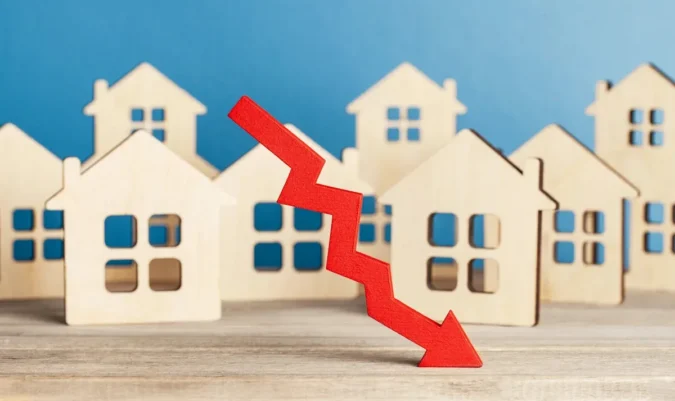
NEW YORK, NY — Economists are not forecasting a housing market crash in 2026, even as the affordability crunch deepens and mortgage rates hover near 8%. Home prices are still rising, inflation remains elevated and buyers continue to feel squeezed, but the wider economy has not shown the kind of collapse that typically precedes a housing downturn.
The picture is mixed for households trying to buy or sell. Demand has cooled because many would-be buyers have stepped back, while sellers have continued to list homes. At the same time, employment has remained sturdy enough to keep a broad national crash off most economists’ radar.
That does not mean the market is healthy for everyone. It means the strain is showing up most clearly in affordability, not in the kind of credit or job shock that helped drive the last housing collapse.
Why economists say 2026 does not look like 2008
The 2007 housing bust was fueled by factors that are largely absent today. Lending standards were looser then, with low- and no-documentation loans and very small down payments far more common. Mortgage underwriting is much tighter now, and buyers generally need to show income, assets and employment history.
David Gottlieb, a wealth advisor at Savvy Advisors, said lending practices have changed significantly since 2007, creating a very different environment. He said the current system is nothing like the days when subprime products were widely available and many borrowers entered ownership with little money down.
Today’s homeowners also have far more equity, which gives many of them room to absorb price pressure without immediately losing their homes. That cushion, combined with stricter lending, is one reason many analysts see a slowdown as more likely than a crash.
Jobs and wage growth are still supporting the housing market
The labor market remains one of the main reasons economists are not expecting a crash. In September, private-sector employers added 90,000 jobs, according to ADP, beating expectations. Dr. Nela Richardson, ADP’s chief economist, called it a strong report and said job creation rebounded after a three-month slowdown.
UCLA Anderson’s Sept. 30 economic outlook also described the U.S. economy as surprisingly resilient despite tariffs, conflict in Iran and a jump in oil prices. The analysis said underlying growth has held around or above 2% and expects the labor market to stabilize, with unemployment remaining near 2%.
That kind of employment backdrop matters because housing crashes usually need more than high prices. They generally require a deeper shock, such as widespread layoffs or a sudden rise in foreclosures, before values can fall sharply.
Sellers now outnumber buyers by the widest margin since 2013
Redfin’s August data showed a striking imbalance: the number of homeowners listing their properties was 58% higher than the number of buyers. That was the biggest gap Redfin has recorded since it began tracking the data in 2013.
Asad Khan, a senior economist at Redfin, said the surplus of sellers over buyers can make it a better time to shop for a home in some respects. But he also stressed that the market only works in buyers’ favor for people who can actually afford to purchase.
Redfin said high housing costs and broad economic uncertainty have pushed many would-be buyers to the sidelines. That has created today’s mismatch, where inventory is easier to find than financing is to secure.
Home price growth is slowing, but values are still climbing
National home prices are not falling in a way that points to a crash. Cotality said annual U.S. home price growth was 1.4% in July, a modest pace compared with recent years. That slowdown may ease pressure somewhat, but it still leaves prices moving upward.
Dr. Selma Hepp, Cotality’s chief economist, said slower appreciation should gradually help affordability, especially if wage growth stays stronger. She added that local labor markets, affordability limits and mortgage-rate direction will continue to shape the market through the rest of the year.
The National Association of Realtors also reported that affordability improved in August for the second month in a row after five months of declines. Even so, the combination of still-high prices and still-elevated borrowing costs continues to limit how much relief buyers feel.
Supply is tighter than 2008, even if inventory is improving
Supply and demand remain central to whether housing could ever tip into a crash. The key difference from 2008 is that current inventory does not reflect a severe oversupply. As of August 2026, the U.S. Census Bureau reported 8.5 months of housing supply.
Rick Sharga, founder and CEO of CJ Patrick Co., said a balanced market typically has about six months of supply. He noted that the buildup before the financial crisis was far larger, reaching 13 months. That earlier oversupply helped push prices down sharply.
Nationally, today’s supply situation is strained but not extreme enough to resemble the conditions that triggered the last collapse. That is why most observers see a cooler, more selective market rather than a wholesale breakdown in values.
What homeowners and buyers should watch next
Analysts say a real housing crash would probably require a broader economic shock, not just high mortgage rates or stretched affordability. A major stock market drop, prolonged job cuts or a rapid rise in foreclosures could all change the picture if they start to hit homeowners’ ability to pay.
Sharga said consumers should watch local conditions closely, including population growth, job trends, wages, home sales and prices. He also noted that some markets could see price declines even if national data stays positive, though that would not necessarily amount to a crash.
For now, the national outlook points to pressure, not collapse. Buyers may still face difficult monthly payments, but the economy’s current strength and tighter lending standards have kept the housing market from looking like 2008.
More on what homes, rents and new builds are doing near you, on RHS Commoner.
