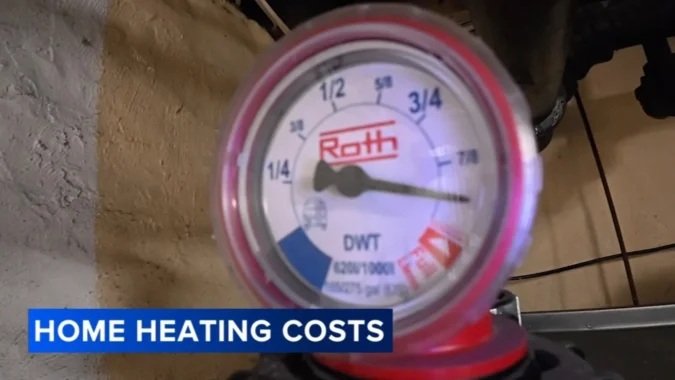
HAVERTOWN, PA — Home heating costs are expected to climb noticeably this winter, and customers who rely on heating oil may face the biggest increase. The forecast points to a general rise of about 8.7% in household heating expenses, while home heating oil prices are projected to surge by more than 30% compared with last year.
That kind of jump could mean hundreds of extra dollars for some households. In the Philadelphia suburbs, local fuel suppliers are urging customers to look at price protection plans and budget billing before colder weather settles in.
Why heating oil customers are facing the sharpest increase
The biggest pressure is coming from global energy conditions tied to the war in Iran and the effective closure of the Strait of Hormuz. Those developments are expected to hit heating oil customers harder than households using other fuels, according to the forecast cited in the story.
Heating oil prices are moving far faster than overall household heating costs. That gap is why suppliers are warning customers to prepare early, especially those who have already been stretched by higher utility and fuel bills in recent years.
For many families, the concern is not just the final number on a winter bill. It is the uncertainty of not knowing how much a delivery will cost from one week to the next as temperatures fall.
A Havertown customer says certainty matters more than guessing the market
Mark Carden of Havertown said he worries about younger people and others living on tight budgets if prices rise sharply. He said big swings in fuel costs can be especially hard when households are already trying to plan around fixed expenses.
Carden takes part in a CAP program through Boyle Energy in Havertown, Delaware County. Under that plan, customers pay a fee and are protected from charges above a set price cap, which gives them a clearer sense of what they will owe.
If market prices end up below the cap, customers still benefit from the lower rate. Carden compared the protection to an insurance policy, saying the extra cost can be worth it if it keeps a family from getting hit with a major surprise.
Boyle Energy says price caps can remove winter anxiety
Patrick Boyle, president of Boyle Energy, said the company’s CAP program is meant to take the stress out of unpredictable winter fuel pricing. He said customers do not have to spend the season worrying that oil prices will suddenly climb out of reach.
Boyle said participants can save money year after year, even if they pay a little extra up front for the coverage. The point, he said, is to make heating bills more manageable and less volatile for families who depend on oil deliveries.
For customers who dislike surprises, the program offers a set range instead of a moving target. That kind of predictability can matter just as much as the actual price when households are trying to budget through the coldest months.
Budget payment plans spread the cost across the year
Boyle also encouraged customers to consider budget payment plans. Under those arrangements, households can spread heating expenses over 10 months starting in the summer rather than facing large delivery bills all at once in winter.
The plan does not lower the price of fuel, but it can make the payments easier to handle. By smoothing out the cost over a longer period, customers may avoid the shock of a large winter invoice arriving during the coldest part of the year.
For families with tighter cash flow, that structure can be just as useful as a discount. It gives them a steadier monthly amount to plan around and can help prevent short-term strain when heating demand is highest.
Maintenance and tune-ups can trim some of the pressure
Suppliers also point to basic maintenance as another way to control heating costs. Homeowners were advised to keep heating systems clean, safe and operating efficiently so they are not wasting fuel when temperatures drop.
Annual tune-ups before cold weather arrives can help a system run better and may reduce avoidable problems later in the season. Even small efficiency gains can matter when fuel prices are high and every delivery counts.
The broader message from local energy dealers is simple: households may not be able to control the market, but they can prepare early. Price protection, budget billing and regular service are being presented as practical ways to soften a winter that could be much more expensive than the last one.
More on what homes, rents and new builds are doing near you, on RHS Commoner.
