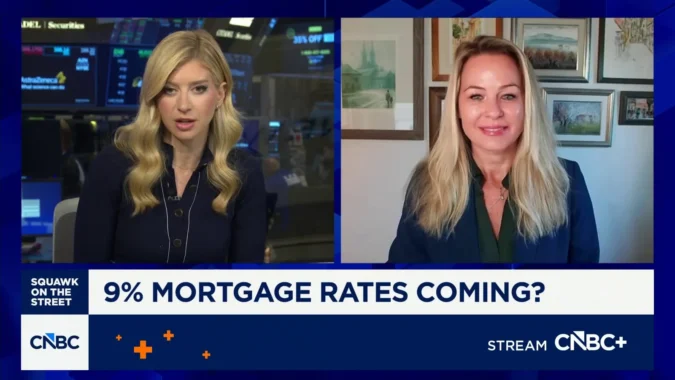
NEW YORK, NY — Mortgage rates could move as high as 9 percent, according to Selma Hepp, chief economist at Cotality, who discussed the outlook on CNBC’s Squawk on the Street. Her comments point to a housing market that remains highly sensitive to shifts in the broader financial environment.
Hepp did not describe the move as certain, but she said the possibility is real if conditions keep pushing borrowing costs upward. For homebuyers and owners considering a refinance, that kind of increase would add another layer of pressure to an already expensive market.
What Hepp Said on CNBC About the Path to 9 Percent
Hepp’s remarks came during an on-air discussion about why mortgage rates could reach 9 percent. CNBC identified her as Cotality’s chief economist and used the segment to focus on what may keep rates elevated.
The interview did not lay out a fixed forecast or timeline. Instead, it framed the 9 percent level as a possible outcome if current market forces continue to work against borrowers. That distinction matters because mortgage-rate moves often depend on a mix of inflation expectations, bond yields and investor demand.
For consumers, even a small upward shift can change monthly payments meaningfully. A move toward 9 percent would likely make affordability more difficult for buyers already facing high home prices and limited inventory.
Why Higher Mortgage Rates Matter for Buyers and Sellers
Mortgage rates remain one of the most important forces shaping housing demand in the United States. When borrowing becomes more expensive, some buyers step back, shop for cheaper homes or delay plans altogether.
Sellers can feel that slowdown too. Higher rates can reduce the number of qualified buyers in the market, which can lengthen listing times and make pricing decisions more difficult.
That dynamic is especially important in a market where affordability has already been stretched. Even households that qualify for financing may find the payment difference between one rate level and the next hard to absorb.
Cotality’s View Fits a Market Still Sensitive to Rate Swings
Cotality, a company focused on real estate data and analysis, often tracks the effects of borrowing costs on housing activity. Hepp’s warning suggests the company sees little room for complacency if market conditions stay unstable.
The comments also underline how closely mortgage pricing follows broader financial signals. When investors demand higher returns or worry about inflation, mortgage rates can rise even if housing demand itself is weak.
That leaves prospective buyers in a difficult spot. Waiting for rates to fall can mean losing time in a market where prices, listings and financing conditions can all move at once.
What a 9 Percent Mortgage Rate Would Mean for Household Budgets
A mortgage rate near 9 percent would not affect all borrowers equally, but it would raise the cost of financing for anyone entering the market or resetting a loan. The monthly payment impact can be substantial over the life of a mortgage.
That would likely force more families to rethink budgets, down payment plans and target price ranges. Some buyers could be pushed toward smaller homes or different neighborhoods, while others may decide to wait.
For homeowners considering refinancing, a higher-rate environment can reduce the appeal of replacing an existing loan. Unless a refinance serves a specific purpose, the math becomes harder as borrowing costs rise.
The Bigger Housing Picture Behind the Warning
The discussion on CNBC reflects a wider concern in housing: rates can remain elevated even when consumers are hoping for relief. That keeps pressure on affordability and makes the market harder to navigate for both buyers and sellers.
Hepp’s comments do not say rates will definitely reach 9 percent, but they do indicate that such a level is within the realm of possibility. For households making plans this fall, that is a reminder that financing costs may stay unpredictable.
As long as mortgage rates remain this sensitive, the housing market will continue to hinge on the direction of the broader economy. Buyers, lenders and sellers all have a stake in whether borrowing costs stabilize or climb further.
More on what homes, rents and new builds are doing near you, on RHS Commoner.
