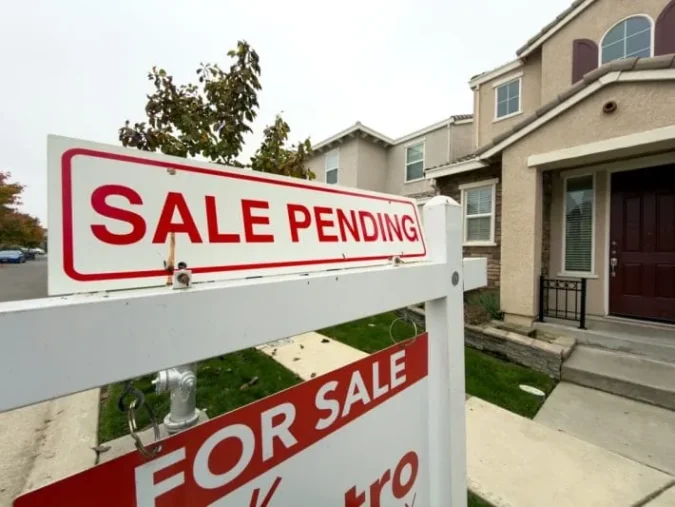
WASHINGTON, DC — Rising mortgage delinquencies can be an early warning sign for a housing market, but they do not automatically tell homeowners what their property is worth. New county-level data from the Consumer Financial Protection Bureau show several places where serious mortgage delinquency climbed sharply over the past year, with some counties more than doubling from their earlier levels.
Serious delinquency means a mortgage is at least 90 days past due, generally after three missed payments. The latest figures also come with an important caution: the Federal Reserve Bank of New York has found that falling home prices and rising delinquencies often move together, while unemployment has an even stronger link to repayment trouble.
Newton and Kanawha post the largest one-year jumps
Newton County, Georgia, and Kanawha County, West Virginia, each saw serious mortgage delinquency rise by 1.4 percentage points. Newton moved from 1.5% to 2.9%, while Kanawha climbed from 0.6% to 2.0%. In both counties, the increase is large enough to stand out in the CFPB’s National Mortgage Database.
Even so, the numbers do not mean every neighborhood will see falling prices. The more immediate risk is that prolonged financial stress can lead to distressed sales or foreclosures, which can add lower-priced comparable properties to the market. That can matter for sellers and appraisers, but actual home values still depend on nearby sales, inventory, and demand.
Florida counties show how price weakness and delinquency can move together
Citrus County, Florida, posted one of the sharpest proportional moves, rising from 0.2% to 1.4%. Hernando County also increased, from 0.9% to 1.9%. The Florida examples are notable because the New York Fed has identified weak home-price conditions in parts of the state, especially along sections of the Gulf Coast.
Researchers there found a negative relationship between local home-price changes and delinquency changes. That does not make home prices the only driver, though. They said labor-market deterioration had an even stronger connection with payment trouble. For homeowners, that means equity matters, but job and income conditions may matter even more.
Georgia and Louisiana counties show clustered stress in the data
Clayton County, Georgia, rose from 1.9% to 2.9%, matching the 2.9% rate in Newton County. Paulding County, Georgia, doubled from 0.9% to 1.8%. Dorchester County, South Carolina, climbed from 0.8% to 1.7%. Lafayette Parish, Louisiana, moved from 0.9% to 1.6%.
The clustering matters because stress across nearby counties can point to broader regional pressure rather than one isolated outlier. Still, county averages can hide neighborhood differences, and the CFPB warns that some local figures are less precise where sample sizes are small. Even in higher-rate counties, most mortgages remain current or only modestly behind.
Why a higher delinquency rate does not equal a lower home price
Mortgage delinquency is a stress indicator, not a direct home-price formula. A county can have a rising delinquency rate without seeing an immediate drop in values if buyer demand remains firm, listings stay limited, or owners have enough equity to avoid distressed sales. That is why buyers, sellers, and homeowners need to look beyond one percentage.
Appraisers and lenders care more about recent comparable sales, property condition, location, supply, and demand. A homeowner planning to sell may also want to track days on market, price cuts, and foreclosure activity. Those measures can show whether stress is filtering into actual transactions in a way delinquency data alone cannot capture.
Large percentage jumps can start from very low base rates
Smith County, Texas, and Kendall County, Illinois, are good examples of why the size of a percentage change can be misleading without the starting point. Smith rose from 0.4% to 1.2%, tripling but still remaining a relatively low serious-delinquency rate. Kendall County doubled from 0.7% to 1.4%.
A similar pattern appears in some of the fastest-moving counties elsewhere. The key point is that a dramatic percentage increase does not always mean a county has a severe housing problem. The absolute rate matters, as do employment, construction, migration, mortgage costs, insurance, taxes, and the number of homes available for sale.
What homeowners should watch instead of reacting to one number
For people trying to gauge local housing conditions, a better approach is to combine several signals. The New York Fed’s county-level home-price data can show whether prices are rising or falling locally. Inventory, recent sales, and job trends help explain whether a delinquency increase is likely to spill into the market.
That broader view is especially important because delinquency and foreclosure are not the same thing. Many delinquent loans never end in foreclosure. At the same time, national foreclosure filings have been rising: ATTOM said U.S. foreclosure filings in July 2026 were 10% higher than a year earlier, while still low by historical standards.
More on what homes, rents and new builds are doing near you, on RHS Commoner.
