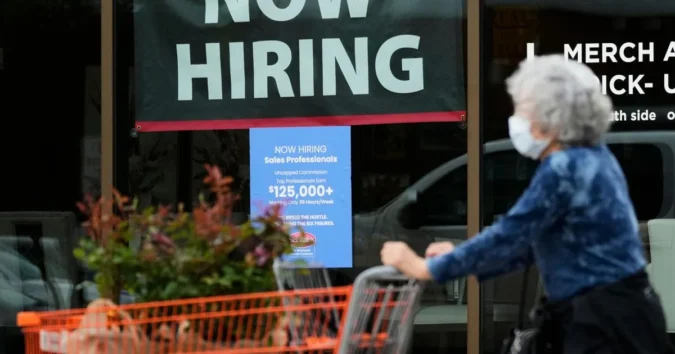
WASHINGTON, DC — Hiring in the United States picked up in August, giving the labor market a stronger-than-expected finish to the summer. Employers added 147,000 jobs, a result that came in above economists’ forecasts and suggested businesses were still bringing on workers even as higher prices continued to squeeze budgets.
At the same time, inflation remained a constant concern for consumers, from the grocery aisle to the gas pump. That mix of better hiring and stubborn costs shaped a week of economic news that touched paychecks, borrowing, travel and day-to-day household decisions.
Labor Department data showed a stronger-than-expected August hiring gain
The Labor Department’s August employment report was the main reason optimism returned to the jobs picture. Employers added 147,000 jobs, easily topping the 110,000 economists had expected. The gain also marked an improvement from June, when hiring had been revised up to 14,000 jobs from an earlier estimate of a decline.
July’s job growth was also revised slightly higher. Together, the numbers pointed to a labor market that may be cooling only gradually rather than breaking down. The report also showed the unemployment rate ticking down to 4.2%, a sign that the jobs market remains solid even if it is no longer running at the very hot pace seen earlier in the recovery.
More openings but fewer workers quitting point to caution among job seekers
Another layer of the jobs picture came from openings and turnover data. The Labor Department’s Job Openings and Labor Turnover Survey, often called JOLTS, showed job openings rising slightly in July to 7.4 million from 7.3 million in June. That suggested demand for workers was still holding up even as some employers reassessed hiring plans.
But the same data also showed fewer people quitting their jobs. Lower quits can mean workers are less confident about finding a better offer, or that they are waiting to see how the economy develops. For households, that can matter because job-switching has often been one of the clearest ways to secure bigger pay gains.
Wages kept rising, but higher prices kept eating into household budgets
Paychecks continued to move higher in August. Average hourly wages rose 3.7% from a year earlier, which is close to the pace seen in recent months. That kind of growth can help workers keep up with expenses, especially when employers are still competing for talent in many parts of the economy.
But the stronger wage figures did not cancel out the pressure from inflation. Americans are still feeling it in groceries, gas and other essentials, and some businesses are also being forced to rethink pricing and staffing. The practical effect is a consumer environment where even a decent paycheck can feel stretched once rent, transportation and everyday purchases are added up.
Mortgage rates moved higher again, tightening the squeeze on home buyers
Borrowing costs in housing climbed during the week as well. The benchmark 30-year fixed mortgage rate rose to 6.5% from 6.2% the previous week, according to Freddie Mac. A year earlier, the average rate stood at 6.35%, so the latest move pushed financing costs back above where they had been last summer.
Higher mortgage rates can add hundreds of dollars a month to the cost of buying a home, depending on the loan size and terms. That makes the market harder for first-time buyers and can also discourage current owners from moving if they do not want to give up an older, lower-rate mortgage. For many households, the result is a slower, more expensive housing market.
Tariffs, oil prices and cybersecurity added to the week’s economic uncertainty
Other developments underscored how many forces are shaping the economy at once. Tariffs remain a factor in business planning, and the tech sector is also dealing with security worries after hacking incidents affecting major companies. At the same time, oil prices have been swaying because of the war between Russia and Ukraine, which can feed through to gasoline and transportation costs for U.S. consumers.
Cybersecurity also stayed in focus after a recent wave of attacks on cloud and artificial intelligence systems. Google said its Gemini AI was hit by three separate organizations during testing, and OpenAI said it was turning more businesses toward open-source tools rather than paid proprietary services. Those moves highlight how companies are adjusting to both security threats and cost pressure.
The broader market picture stayed uneasy even as stocks finished the week higher
Financial markets reacted unevenly to the week’s data. The S&P 500, the Dow Jones Industrial Average and the Nasdaq Composite all managed to finish the week with gains, showing that investors were still willing to lean into the rally despite mixed signals from inflation and hiring.
But the path was not smooth. Treasury bond yields moved higher, which can raise borrowing costs across the economy and make mortgages more expensive as well. For households, the takeaway was straightforward: stronger hiring offered reassurance, but higher rates and persistent inflation still made it harder to plan for buying, saving and spending with confidence.
More on what homes, rents and new builds are doing near you, on RHS Commoner.
