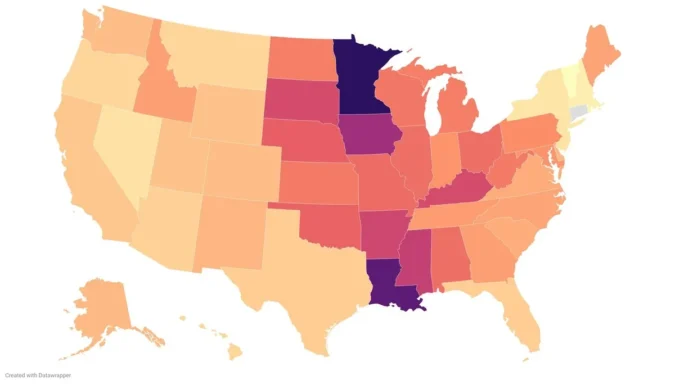
WASHINGTON, DC — The share of seriously underwater mortgages rose in the second quarter of this year, according to a new report from ATTOM, the real estate analytics firm. ATTOM said 3.2% of mortgages were underwater, up from 2.7% a year earlier. The firm defines an underwater mortgage as one where the homeowner owes at least 25% more than the home is worth.
That gap can matter because it creates negative equity, which can make selling or refinancing difficult without bringing money to the closing table. ATTOM said the 3.2% share still translates to roughly 1 million to 2 million homes nationwide, a level that can also limit the number of properties available for sale.
Where The Pressure Is Highest
The biggest year-over-year increases were in Minnesota, South Dakota, Iowa, Michigan and the District of Columbia. Minnesota had the highest share of seriously underwater mortgages in the latest quarter at 12.1%, up from 2.6% a year earlier. South Dakota rose to 5.7% from 3.1%, Iowa climbed to 7.8% from 5.9%, Michigan increased to 4% from 2.5%, and the District of Columbia moved to 5% from 3.7%.
ATTOM also listed the places with the largest declines. Louisiana fell to 10.3% from 11.9%, Kentucky dropped to 5.7% from 7%, North Dakota eased to 4% from 5%, Oklahoma slipped to 4.7% from 5.6%, and New York decreased to 1.5% from 2%. The highest overall shares this quarter were Minnesota, Louisiana, Iowa, Mississippi and Arkansas.
Why These Markets Stand Out
Mortgage researcher Mujahid Merchant said underwater loans have often been concentrated in Gulf and coastal states, but this cycle has shifted more toward places with many low-equity loans made in 2022 or later. He said rising interest rates after the early pandemic era pushed more buyers toward FHA loans, which can require as little as 3.5% down.
Merchant said fast home-price growth in some coastal markets helped offset those small down payments, while parts of the Midwest did not see the same appreciation. He pointed to Minneapolis, which became one of Realtor.com’s hottest metros in October 2022, and said recent buyers there often purchased near a peak and then faced flat or slightly lower prices. Home prices in Minneapolis rose less than 1% over the past year, compared with nearly 14% in 2021.
What Homeowners Can Check
Cameron Walker, a real estate expert and manager at Clever Real Estate, said the pattern is tied to thin down payments, slower price growth and recent buying activity in markets such as Minneapolis, South Dakota, Iowa and Michigan. He said a buyer who put down 5% in a market that has since flattened has very little cushion before slipping underwater, and that current mortgage rates are not the only factor shaping the risk.
Walker said homeowners should not panic unless they need to sell, refinance or tap equity. For anyone worried about where they stand, he suggested checking the current value of the home with local agents. ATTOM’s second-quarter report provides the underlying data, and the latest state-by-state figures show where negative equity is most concentrated right now.
More on what homes, rents and new builds are doing near you, on RHS Commoner.
