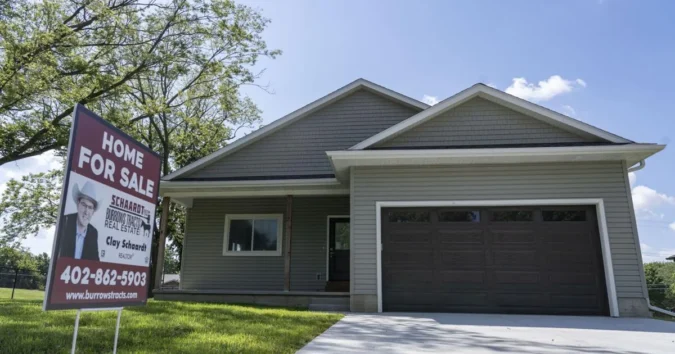
PAWNEE CITY, NE — Pawnee City’s offer of $50,000 to anyone who buys a home and settles in town has produced one confirmed taker so far, even after the idea drew major attention online. The program was designed to lure new residents to a community of roughly 850 people that has spent years trying to reverse population loss and add housing.
Officials say the incentive is part of a larger effort to make the town more attractive to families and workers. The city and the Pawnee City Community Foundation have been working with developers, using donated land, cash assistance and low-interest loans to support new construction and make moving in more realistic for buyers who might otherwise head elsewhere.
How the $50,000 deal works for buyers who choose Pawnee City
The headline figure is straightforward: buyers who move to Pawnee City can receive $50,000 in down payment assistance through the community foundation’s program. That money is structured as a 0% interest loan that is income-restricted to households at or below 150% of the area median income, which currently works out to $87,500 for a family of two.
The loan also applies only to three homes the foundation helped build with a $200,000 state grant. Foundation secretary Suzanne Borcher said the money cycles back when the home sells, allowing the group to use the same dollars again for future buyers. In that sense, the incentive is meant to function less like a one-time giveaway and more like a revolving local tool.
Borcher said the point is not simply to hand out cash, but to help families afford a move into town and stay there. City Clerk Tammy Curtis said the phones and email inbox were flooded after the program and related coverage spread, though none of the calls initially converted into a move.
Only one family has closed, and the town is still waiting for more
So far, the city and foundation have reported only one completed sale connected to the effort, to a family from Tennessee. Curtis said many people reached out after the program gained attention, but a large number of those inquiries did not lead to a purchase.
That gap between curiosity and action is one of the challenges facing Pawnee City. There has been strong interest from readers and would-be movers, but interest alone does not solve the practical problem of financing, timing, or the decision to relocate to a small rural place. Officials say the program’s early response shows awareness is not the same as commitment.
The city’s experience also reflects a broader pattern in housing recruitment efforts. Communities can spark attention quickly, especially when they offer cash or other benefits, but converting that attention into actual residents takes patience and a housing supply that matches what buyers can afford and what they want to live in.
Why Pawnee City is using incentives to fight a housing shortage
Pawnee City sits in a part of the state where older homes, limited labor and higher materials costs make new construction difficult. Like many rural Nebraska communities, it has seen young people leave and has struggled to replace them with new households.
Mayor Gary Person said there is a practical reason small towns need to be creative. Developers and contractors generally look for the highest return, and that often pushes them toward larger markets. Smaller towns, he said, have to offer something extra if they want builders and buyers to take a chance.
The town’s situation is not unique. In rural areas, homes can be cheaper than urban properties but still hard to build because land, materials and labor costs do not shrink at the same pace as local wages. That leaves towns like Pawnee City trying to offset risk with incentives and donated land rather than waiting for the market to solve the problem on its own.
Three new homes, a state grant and a revolving local loan pool
The community foundation has already built two homes under the program and plans a third. Those houses were completed with help from a $200,000 state grant, and the foundation also used land donated by the city after demolition work cleared vacant sites for rebuilding.
In addition to the homebuyer assistance, the town has tried to lower the barrier for construction by making lots available at no cost for about 20 years, as long as the buyer commits to building within a year. That approach has helped a small number of families decide to build rather than move into neighboring towns or cities.
Mayor Curtis said the bigger lesson is that the incentive is only one piece of a longer effort. The city is trying to make a habit of turning empty ground into actual housing, and then recycling the aid when those homes are sold. Officials see that as a more durable strategy than simply offering a one-time bonus and hoping it changes the market.
What the city says the payoff could mean for a town this size
City and foundation leaders argue that Pawnee City does not need to grow to the size of a regional hub to benefit from a steady stream of new households. Even a handful of additional families can help support the school, local employers and basic services in a town where every resident matters more than in a larger place.
That is why officials keep returning to the same point: the goal is not just to sell houses, but to keep people in town. As Borcher put it, the incentive is about making residents aware that the opportunity exists and that small-town living can still be a practical choice.
Real estate agent Jeff Fink said the town’s most expensive home for sale is still far below what many people might expect, with one brick Victorian listed at $87,000 after a price cut from $97,000. He said the affordability is real, but the larger challenge is getting enough buyers to see rural Nebraska as a place where they could build a future.
More on what homes, rents and new builds are doing near you, on RHS Commoner.
