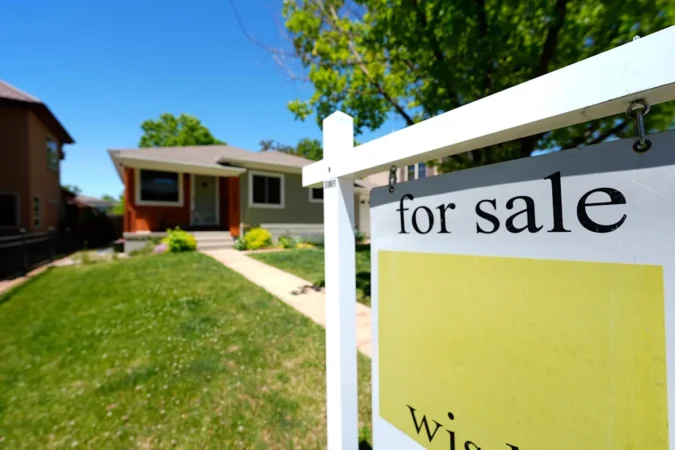
WASHINGTON, DC — Homebuyers hoping for a quick drop in borrowing costs are still waiting. Mortgage rates are moving higher, not lower, and a weekly lender survey showed more than half of the lowest-rate offers landing closer to 8% than 6%.
Freddie Mac said the average 30-year fixed mortgage rate reached 7.03% for the week ending Sept. 24, up eight basis points from the previous week. The average 15-year fixed rate climbed to 6.42%, also higher than a year ago. That leaves borrowers facing a market where the financing side of a purchase remains stubbornly expensive.
Freddie Mac’s latest numbers show borrowing costs still climbing
The newest Freddie Mac data make the recent move plain. The average 30-year fixed mortgage rate rose from 6.95% a week earlier to 7.03%. A year earlier, the average was 6.30%, underscoring how much higher monthly payments have become.
The 15-year fixed mortgage rate increased by 16 basis points in the same week to 6.42%. Over the past 52 weeks, Freddie Mac’s ranges show the 30-year loan running between 5.98% and 7.03%, while the 15-year loan has moved between 5.35% and 6.42%.
For borrowers, those shifts matter because even small rate changes can alter what a house costs each month. The jump does not only affect first-time buyers. It also hits owners who want to move, refinance into a shorter term or trade up to a more expensive home.
Bond market weakness is keeping mortgage lenders defensive
Mortgage rates usually follow bond market yields, and that market has been under pressure. The 10-year Treasury yield, a key benchmark for home loans, has repeatedly topped 5% since mid-September for the first time since 2023.
Rob Chrisman, a longtime mortgage industry analyst, said lenders have been repricing quickly as the bond market selloff continues. He pointed to inflation pressures from war-related price increases, a growing federal budget deficit, expectations that the Federal Reserve may tighten policy further, a weak five-year Treasury auction and higher crude oil futures tied to the Middle East conflict.
Fannie Mae’s September forecast also suggests little near-term relief. Its outlook projects mortgage rates near 6.7% through 2027, which would leave home loans well above the ultra-low levels seen during the pandemic years.
The Federal Reserve still matters even if mortgage rates do not follow it exactly
The Fed does not set mortgage rates directly, but its actions still shape the broader borrowing environment. After the central bank’s first interest rate increase in three years, the Federal Open Market Committee signaled it is leaning toward another quarter-point hike before the end of the year.
That matters most for shorter-term lending costs, where the federal funds rate has the clearest influence. Mortgage rates are tied more closely to the 10-year Treasury yield, but they usually move in the same general direction when the Fed is pushing policy tighter.
In practical terms, a higher Fed rate can keep pressure on the rest of the market. When lenders see the central bank staying vigilant on inflation, they tend to price loans more cautiously rather than cut rates aggressively for homebuyers.
Why today’s mortgage rate is still far above the Treasury yield
The gap between mortgage rates and Treasury yields is another reason home loans remain expensive. Lenders charge a spread above the 10-year Treasury yield to cover costs and the risk of making mortgages.
That spread widened over the past few years to more than two percentage points. Even though it has narrowed somewhat as bond yields have risen, it remains close to two points. Freddie Mac’s 30-year average of 7.03% versus a 10-year Treasury yield of 5.12% works out to a spread of 1.91 percentage points.
In other words, even if Treasury yields ease a little, mortgage rates may still stay elevated unless the spread compresses further. That is why buyers looking for a return to the 4% range may need more than a small improvement in bond markets.
Housing supply is still tight, so lower rates would not fix affordability alone
Waiting for a rate drop may not solve the affordability problem by itself. The housing market remains short of supply, especially in price ranges that would work for many first-time buyers. When more buyers are chasing too few homes, sellers can keep prices firm.
Federal Reserve Bank of St. Louis data show the median sale price of single-family homes rising for most of the period since the first quarter of 2009. The median was $208,400 then and had climbed to $410,700 by the second quarter of 2026.
Even a recession may not deliver simple relief. If rates fall during a downturn, more buyers often come off the sidelines, adding demand to a market that already lacks enough homes. Buyers generally need both cheaper borrowing and softer prices to see meaningful savings.
Buyers may need to shop differently instead of waiting for a perfect rate
Analysts suggest the better move may be to focus on what is affordable now rather than waiting for a dramatic break in rates. That can mean choosing a smaller home, a condominium or a property in a less obvious neighborhood instead of stretching for a larger house.
Other options include looking at fixer-uppers, which can be financed in part through loans such as an FHA 203(k) mortgage that combines purchase and renovation costs. Buyers can also think about whether a longer commute opens the door to a more manageable payment, or whether a 15-year mortgage would reduce interest costs over time.
Rate buydowns are another tool, letting a borrower pay upfront for a lower rate, either temporarily or permanently. In a market where home prices remain high and mortgage rates are still near 7%, the strategy is less about timing perfection and more about finding a payment that fits today’s budget.
More on what homes, rents and new builds are doing near you, on RHS Commoner.
