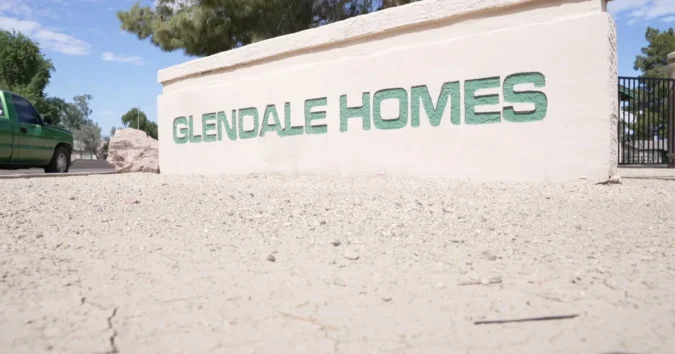
GLENDALE, AZ — Glendale’s court system recorded more than 73,000 eviction filings from 2023 through 2025, a number city officials say shows how many households are still struggling to keep up with rent and utility costs. The city’s Community Needs Assessment Review says Country Meadows Justice Court had the highest volume of eviction cases in Maricopa County in 2025.
At the same time, Glendale says fewer people are living without shelter on its streets. The assessment puts the city’s unsheltered count at 92 in 2026, down from 406 in 2022. Even with that improvement, the city says it still needs more prevention, outreach, shelter and permanent housing options.
City leaders say the goal is to drive eviction filings down
Kimberly Hall of Glendale Community Services said the city wants the eviction number to reach zero. She said the city’s broader goal is to improve residents’ lives every day, which means keeping families housed before their situations worsen.
The eviction total matters because it reflects how many people are already facing court action, not just the number of households living on the edge. Hall said the city continues to look for ways to connect residents with aid before they lose housing.
The assessment does not say the filings are limited to one neighborhood or one type of household. But the volume is high enough to keep Glendale focused on prevention as well as longer-term housing options.
Rental and utility help remain a main line of defense
Glendale says it offers rental assistance and utility assistance to help residents avoid eviction and keep essential services on. Those programs are part of a wider housing response that also includes the Glendale Housing Authority.
The city says the housing authority’s 155 public housing units are full. More than 1,300 Housing Choice Vouchers are also in use in Glendale, along with voucher programs for veterans and foster youth. Those programs are intended to reduce the gap between income and housing costs for residents who qualify.
Even with those resources, the city says demand remains high. That is why officials continue to point residents toward early help rather than waiting until a lease is already in danger.
Public housing waitlist still holds about 1,000 people
About 1,000 people remain on the public housing waitlist, according to the city. Hall said Glendale checks in with those households each year so they know about other services that may be available while they wait.
That annual contact matters because the waitlist does not mean a family is only waiting for a unit. It also gives the city a way to remind residents about rental aid, utility help and other connections that might keep them stable in the meantime.
With all 155 public housing units occupied, the waitlist remains one of the clearest signs of continued pressure on local housing supply. The city has not said how long the average wait is.
A longtime resident says the waitlist eventually made housing affordable
Patricia Smith, a lifelong Glendale resident, said public housing finally gave her the chance to afford a stable place to live. She now pays $177 a month in rent, plus utilities, in public housing.
Smith said the lower monthly cost has made a major difference in her life. She also urged others on the waitlist not to give up, saying the city keeps checking to see where applicants stand.
Her experience offers a concrete example of what the city’s housing programs can do when a unit becomes available. It also shows why residents continue to hold on while waiting for help.
Officials point residents to local offices and 2-1-1 Arizona
Yucca District Councilwoman Dianna Guzman called the eviction numbers concerning and said help is available for people facing housing insecurity. In a statement, she encouraged residents to reach out before the problem grows.
The city listed several places where people can ask for help. Guzman’s office can be reached at 623-930-2249, and staff can connect residents to city departments and resources. Glendale Community Action Program can be reached at 623-930-2854 for connections to city and county services.
Residents can also call 2-1-1 Arizona, the statewide information and referral line for housing, transportation, heat relief and other needs. Glendale officials say those contacts are meant to make it easier for people to find help quickly.
Lower street homelessness does not mean the need has disappeared
The city’s unsheltered count dropped sharply between 2022 and 2026, but officials say that decline should not be mistaken for the end of the housing problem. Glendale’s assessment says the remaining need for prevention, outreach, shelter and permanent housing is still significant.
That warning sits alongside the high eviction total and the full public housing waitlist, showing a housing system under pressure from multiple directions. Fewer people on the street is good news, but the city says it still has many residents who need support before they lose housing altogether.
For Glendale, the next challenge is not just responding after a crisis. It is finding enough assistance, vouchers and units to keep more residents housed in the first place.
More on what homes, rents and new builds are doing near you, on RHS Commoner.
