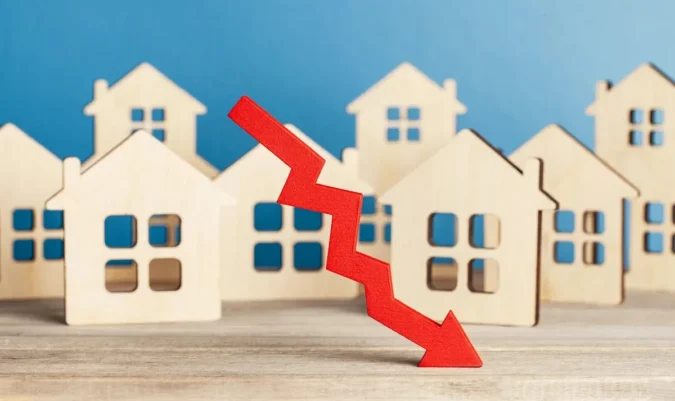
NEW YORK, NY — The U.S. housing market does not appear headed for a crash in 2026, even with mortgage rates rising again and affordability still strained. Housing executives and economists describe the market as a correction marked by slower activity rather than the kind of collapse that followed the 2007 financial crisis.
The main reason is that the conditions look different now. Homeowners have far more equity, lending standards are tighter, and the number of homes for sale remains limited. At the same time, job growth has not weakened enough to suggest a sudden break in demand, and home prices are still inching higher nationally instead of falling sharply.
Why analysts say this looks like a correction, not a crash
Hoby Hanna, chief executive of Howard Hanna Real Estate Services, said the market is not heading toward a crash but toward stability after years of sharp swings. He said today’s housing conditions are fundamentally unlike 2008 because equity levels are high, lending standards are sound, and inventory remains constrained.
That view matters because a crash usually needs a major imbalance between supply and demand, along with broader economic weakness. Instead, the market appears to be settling into a slower pattern in which buyers and sellers are still negotiating, but neither side is seeing the extreme dislocation that typically signals a plunge in values.
For households trying to time a move, that means 2026 is shaping up less as a bargain-hunting year and more as a period of normalization. Prices are not surging, but the national data also do not point to a broad decline that would resemble a crash.
Job data points to steady demand for housing
Employment trends remain one of the clearest reasons economists are not predicting a housing collapse. The May Job Openings and Labor Turnover Survey showed openings at 7.6 million and hires at 5.2 million, with total separations little changed at 5.1 million.
Private payrolls also added 98,000 jobs in June 2026, according to ADP, and pay rose 4.4% from a year earlier. ADP chief economist Nela Richardson said hiring stayed steady, with job gains continuing to favor certain industries such as health care.
That does not mean the labor market is booming. But it does suggest the economy is still creating enough income and employment stability to support housing demand, which makes a sudden nationwide fall in prices less likely.
Home prices are rising slowly rather than falling fast
National home prices are not slumping. Cotality reported annual U.S. home price growth of 0.8% in May 2026, up from 0.4% in April. That is a far slower pace than buyers saw during the earlier surge in 2025, but it is still growth.
Thom Malone, principal economist at Cotality, said the market is in a period of low sales and low price growth. He described the environment as one where buyers and sellers remain at a standstill, with modest gains still the most likely outcome.
That pattern points to a market that is cooling, not breaking. For buyers, it may mean less competition than during the frenzy of recent years. For sellers, it means pricing power has eased, but nationwide home values are not showing the kind of collapse that defines a crash.
Supply remains tight, but not like the buildup before 2008
Inventory is another key difference from the run-up to the last housing crisis. The National Association of REALTORS® said housing supply stood at 4.5 months in May 2026. In a balanced market, six months of supply is usually considered normal.
Rick Sharga, founder and chief executive of CJ Patrick Co., said the 2008 crisis was preceded by an oversupply of about 13 months, more than double the level typically associated with balance. Current conditions are tight, but they do not show that kind of excess.
That matters because a crash usually requires too many homes chasing too few buyers. Today, the imbalance runs the other way: too few homes in many places, which helps keep prices from falling sharply even when demand is soft.
Affordability did worsen in May, however, ending an eight-month stretch of improvement. Mortgage rates have also climbed back into the mid-6% range, which continues to strain buyers even if it has not broken the market.
Why today’s lending standards are a major buffer
Economists also say the mortgage market itself is far healthier than it was before the last crash. David Gottlieb, a wealth advisor at Savvy Advisors, said lending practices tightened sharply after 2007, creating a very different environment for borrowers and lenders.
The era of low-documentation loans and widespread zero-down mortgages is mostly gone. VA loans still allow 0% down for eligible borrowers, and FHA loans can require as little as 3.5% down, but both still involve income, asset and employment checks.
That means today’s homeowners generally enter purchases with more skin in the game and more equity to protect. The average American has just under $300,000 in home equity, giving many owners more room to absorb price weakness or make pricing concessions if they need to sell.
Gottlieb said comparing 2008 with today is like comparing apples and oranges. The banking system, consumer balance sheets and mortgage underwriting standards are simply not the same.
What buyers and sellers should watch if conditions worsen
Even though a national crash looks unlikely, analysts say local markets can still weaken. Rick Sharga said some places may see prices fall even if the national average holds up, and those local declines could matter for owners and buyers in specific metros.
Consumers should watch for signs such as rising unemployment, falling wages, shrinking population and a drop in home sales. A major economic shock, including a stock market slide or a prolonged wave of job cuts, could change the outlook more quickly.
For buyers, a downturn could create lower prices but also make it harder to qualify for a mortgage if job losses spread. For sellers, the best defense is often realistic pricing and the willingness to offer concessions if the market turns more competitive.
Households worried about a possible downturn are also being urged to build savings, cut high-interest debt, stay within budget and favor fixed-rate mortgages when possible. Those steps will not stop a market shift, but they can make it easier to manage one.
More on what homes, rents and new builds are doing near you, on RHS Commoner.
